Xiaomi Electric Vehicles Set to Enter Israeli Market Through New Partnership#
In a significant move for the Israeli automotive market, electronic products importer Hemilton, owned by the Aharoni family, has joined forces with Land Rover importer Hamizrach, controlled by the Eini family, to establish a new joint venture. This partnership is poised to introduce Chinese tech giant Xiaomi’s highly anticipated electric vehicles (EVs) to Israel.
The newly formed company, equally owned by both parties, is expected to focus on importing Xiaomi’s EVs, with sales in Western markets slated to commence next year. This collaboration addresses a crucial need for Hemilton, which, despite its previous announcement to import Xiaomi EVs, lacked the extensive infrastructure required for national-scale vehicle marketing and servicing. Hamizrach, with its established presence and experience in the luxury vehicle segment, provides the necessary local expertise.
Xiaomi’s Rapid Ascent in the EV Market#
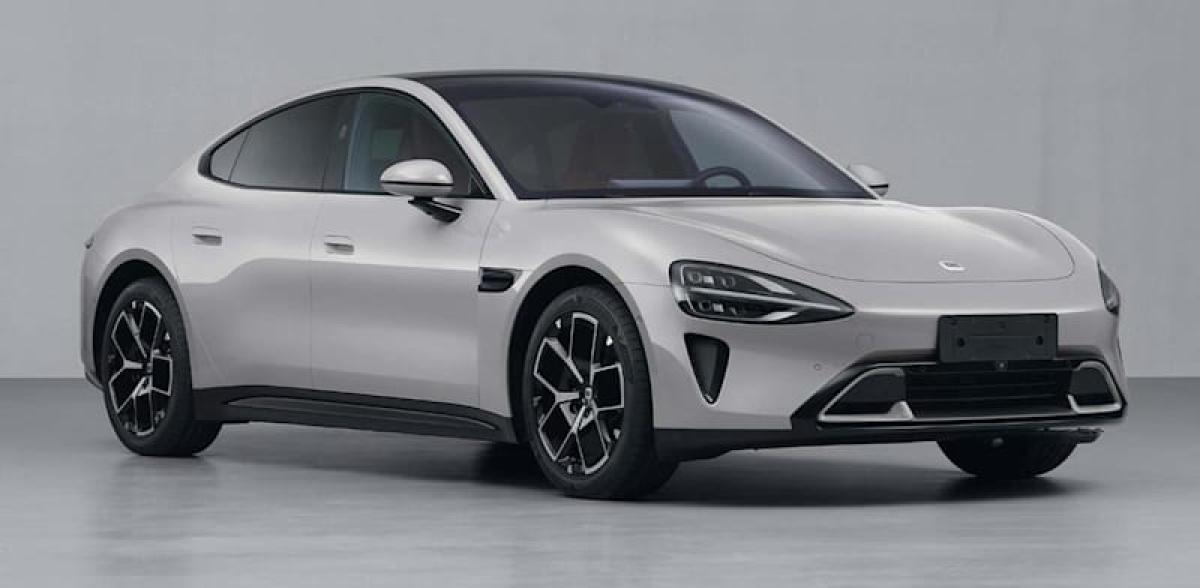
Xiaomi, a company renowned for its electronic products, only ventured into vehicle production in March 2024. Its initial offering, a single electric sedan model, has quickly become a formidable competitor to the Tesla Model 3 in China. The company has already delivered over 240,000 units in its home market, with a waiting list extending several months, underscoring the immense demand for its vehicles.
Adding to its impressive lineup, Xiaomi recently launched the sporty electric crossover SU7 in China. This model, designed to compete with the Tesla Model Y, boasts superior range and power specifications at a more competitive price point. The SU7 has garnered extraordinary attention, securing over 200,000 pre-orders within the first three minutes of its sales opening in China, leading to a waiting time of over a year for new orders. The company also plans to introduce its first plug-in hybrid model next year.
Despite these remarkable sales figures, Xiaomi’s car manufacturing division is currently operating at a loss, with the company incurring thousands of dollars in losses for each vehicle sold. However, the strategic entry into the EV market has significantly boosted Xiaomi’s share price, which has nearly tripled since mid-2024, reflecting investor confidence in its long-term potential.
Future Outlook and Global Expansion#
To meet the escalating demand, Xiaomi is in the process of completing an additional manufacturing plant, which is expected to substantially increase its production capacity. While the company has officially stated that it will not begin direct exports to the West before 2027, it has already taken steps to facilitate international distribution. Approximately two months ago, Xiaomi entered into an agreement with an international trading company from China to handle exports to various countries until official exports commence. Furthermore, the company has initiated vehicle testing in Europe, signaling its commitment to global expansion.
This partnership between Hemilton and Hamizrach marks a pivotal moment for the Israeli automotive landscape, promising to introduce cutting-edge electric vehicle technology and further diversify the market. The collaboration leverages the strengths of both companies, setting the stage for Xiaomi’s successful entry into Israel.
Update: Where Things Stand in Mid-2026#
Nearly a year on, the timeline has firmed up rather than accelerated. Hemilton has reiterated that it expects to import Xiaomi cars around 2027, tied explicitly to the vehicles meeting European homologation standards and to inventory availability — Xiaomi’s own European launch is also scheduled for 2027. In the meantime, Xiaomi has been expanding its line-up (it now sells the SU7 sedan and the YU7 crossover in China and has set an internal target of around half a million cars in 2026) and has opened an R&D centre in Munich to adapt its vehicles for European regulations. For Israeli buyers, the practical takeaway is unchanged: Xiaomi cars are not arriving imminently, and anyone in the market for a Chinese EV today should look at brands already established here.
Why This Matters Beyond the Showroom#
A Xiaomi car landing in Israel is a different kind of story from another BYD or Chery model arriving. Xiaomi is, first and foremost, a consumer-electronics brand that millions of Israelis — and a large share of the Chinese and broader Asian community here — already own a piece of, whether a phone, an air purifier, or a scooter. Its move into cars is the clearest single example of the Chinese “ecosystem” business model reaching Israel: the same account, app, and brand spanning your pocket, your home, and your driveway.
That raises the same questions other Chinese vehicles have already provoked in Israel — data handling and connected-car security — but with a sharper edge, because Xiaomi’s value proposition is precisely the integration of phone, home, and car data. Israel’s defence establishment has already moved to restrict Chinese vehicles on security grounds (see https://asiansinisrael.com/2025/12/israel-defense-industries-ban-chinese-vehicles/); a deeply connected brand like Xiaomi will likely face that scrutiny early. Readers weighing the brand when it does arrive should factor in not just price and range but how comfortable they are with that level of integration.
For the wider context of how thoroughly Chinese carmakers have taken over the Israeli market, see https://asiansinisrael.com/2025/05/chinese-cars-israel-market-leader/ and https://asiansinisrael.com/2025/05/chinese-cars-increase-market-share/. For another Chinese EV technology heading to Israel, see https://asiansinisrael.com/2026/04/byd-flash-ev-charging-israel/.
Source: Globes English