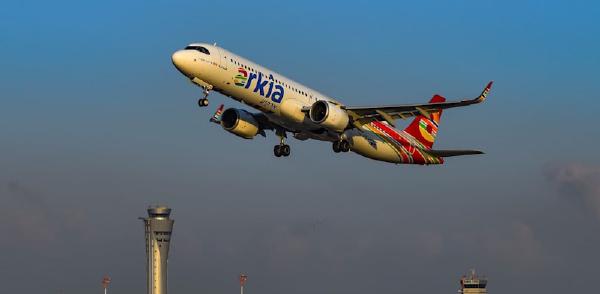
Flight options from Israel to Southeast Asia are picking up again after a long period of uncertainty, route cancellations and a sharp reduction in connection options. Last week, Arkia launched new direct routes: a weekly flight to Vietnamese capital Hanoi, and three weekly flights to Bangkok, a route that until now was operated exclusively by El Al.
At the same time, UAE carriers flyDubai and Etihad are increasing the frequency of convenient connections to the East. The result: more choices and lower fares, even during the peak season to southeast Asia in the winter months.
Round-trip tickets to Bangkok in January can already be purchased for less than $1,000, a price that was difficult to obtain six months before the flight date during the same period last year. El Al offers round-trip tickets starting at $889, and Arkia starting at $998. To Hanoi, a route on which Arkia is the exclusive operator, return fares start at $1,398.
Competition from the UAE
UAE airlines are strengthening their hold on the Israel to Southeast Asia market. flyDubai and Etihad offer convenient connections to destinations in the East, and the former has even increased the frequency of its flights until the end of the summer season in Israel. These are two airlines that have demonstrated deep loyalty to the Israeli market throughout the war, canceling flights only in exceptional situations and hastening to restore them immediately after the security situation calms.
The UAE airlines have two advantages: the fare, which is usually more attractive; and the time, since their ability to fly over Oman shortens the flight duration. In terms of fares, round-trip flights to Bangkok with Emirates in combination with flyDubai in January start at $860, and with Etihad from $833. On the route to Hanoi, the starting price via Emirates in combination with flyDubai is $1,233. In most cases, the longer the waiting time on the connection, the lower the ticket price.
Since the outbreak of the war, and even shortly before it, flights from Israel to Southeast Asia have experienced a series of difficulties. Initially, there was a sharp decline in demand, partly due to the widespread call-up of reservists that interrupted travel plans of many young people, some of whom were planning their big trip to the East, and others who were forced to return to Israel mid-trip to participate in the war.
At the same time, foreign airlines reduced their operations in Israel, and some halted flights altogether. Major players that allowed convenient connections, including Air India, operated erratically, while Turkish Airlines, which led the connection market, disappeared from the Israel aviation scene completely. Israeli airlines received exclusive rights on the few direct routes that remained active.
The discontinued solution
In February 2023, Oman announced for the first time that it would allow Israeli planes to fly over its airspace, which shortened Israeli airlines’ flights to the East, cut flight costs, and allowed them to compete with international airlines operating on the same routes. The approval received by the Israeli airlines significantly improved their situation relative to their Asian competitors, saving passengers about two hours of flight time and reducing costs, less fuel, and a smaller crew of pilots.
El Al and Arkia planned to add routes to Delhi (in India) and Colombo (in Sri Lanka), but the events of October 7th ruined the plans. Today, this option is not available, but despite its absence, the direct flights of the Israeli airlines still have the distinct advantage of allowing passengers to avoid connection stopovers.
Who actually benefits
Falling fares to Southeast Asia are usually framed around Israeli backpackers and holidaymakers, but the people for whom the difference is most material are often the region’s diaspora communities in Israel. Thailand’s large community of agricultural workers, and the smaller Vietnamese-Israeli community, travel these routes not for leisure but to see family — and a several-hundred-dollar swing in a round-trip fare, plus the choice between a direct flight and a connection through the Gulf, changes how often a trip home is realistic. The arrival of a direct Hanoi service in particular gave the Vietnamese community a connection that simply did not exist before. For more on the new routes themselves, see https://asiansinisrael.com/2025/08/arkia-flights-bangkok-hanoi/.
There is a lighter knock-on effect too: cheaper, more frequent flights mean more Israelis returning from Thailand and Vietnam with a taste for the food, which feeds demand for the real thing back home — see our guides to the https://asiansinisrael.com/2026/05/best-thai-restaurants-israel/ and https://asiansinisrael.com/2026/05/best-vietnamese-restaurants-israel/.
Update — May 2026
The competitive shift described above has held and deepened. Arkia’s Bangkok and Hanoi routes both launched on schedule (November 2025 and January 2026), and Arkia has since added a direct Tel Aviv–Phuket route for the Spring–Summer 2026 season, competing with El Al there as well. The Gulf carriers remain a major presence on connecting routes. Specific fares move week to week and seasonally — treat the numbers above as an August 2025 snapshot — but the structural picture of more carriers and more direct options on Israel–Southeast Asia routes is intact as of mid-2026. The Delhi and Colombo routes mentioned above remain unflown.
Source: Globes